Ok, so these thoughts are spurred by King Lear and the discussion we had about him in class.
In the play King Lear, there is a part where King Lear is thrown out of the households of both of his two evil daughters. Because of their betrayal, compounded with being exposed to the elements while living on a heath, King Lear starts to lose it. It's kind of a rough time for him. And because of the harshness that his fate has dealt him, he starts to lose his identity. He just lost his family, his power, his soldiers, his kingdom, most of his friends, his self-respect, etc. and his senile mind can't really handle it.
Ok, so identity is one of the themes of King Lear. There is also a strong motif of nature throughout the play. And as I was thinking about this, and about the things that we discussed in class, something clicked in my mind. So often in life we base our identities on things like our possessions, our wealth, where we live, how we look, or other people's opinions of us. But none of these things can bring us true joy, as King Lear was able to experience. These things don't last and once they're gone, what are we left with? Emptiness and a sense of being unfulfilled. So what do we base our identities on? This is where it gets interesting.
I was sitting in class thinking about this and I realized that if we are basing our identities on these temporal things, we are limiting our progression because we are limiting how far our identities can grow. We are chaining ourselves to temporal objects. And then I realized that the gospel of Jesus Christ truly liberates us because it gives us an identity that is independent of the world. The gospel helps us to understand who we truly are. As we recognize our identity as children of God, that is something that will never change, no matter what situation we are in. And this identity is far more fulfilling than anything the world has to offer. So to relate this back to King Lear:
KING LEAR
Why, thou wert better in thy grave than to answer
with thy uncovered body this extremity of the skies.
Is man no more than this? Consider him well. Thou
owest the worm no silk, the beast no hide, the sheep
no wool, the cat no perfume. Ha! here's three on
's are sophisticated! Thou art the thing itself:
unaccomodated man is no more but such a poor bare,
forked animal as thou art. Off, off, you lendings!
come unbutton here.
King Lear is recognizing that the identity of man does not rely on external sources. You don't need silk, hides, wool, perfume. You are the thing itself. You are your own identity, independent of anything else. The nature motif in this play neatly takes the role of God. It was in nature that the characters were able to have revealed to themselves who they really are.
Tuesday, February 28, 2012

Thursday, February 23, 2012
A Midsummer Night's Dream
So I read A Midsummer Night's Dream last week. It was sooo good! It's full of love, and confusion, and brilliant comedy. To be honest, all of the love triangles/squares remind me a bit of the college life :)
Anyway, to lessen the confusion of who the main couples are during all the switcharoos, I've made some beautiful and detailed pictures to help.
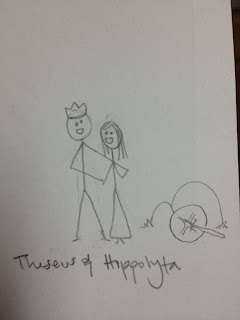
.jpg)


There you go! So now you can read the play and remember who really loves who...or who will really love who in the end.
Anyway, to lessen the confusion of who the main couples are during all the switcharoos, I've made some beautiful and detailed pictures to help.

.jpg)


There you go! So now you can read the play and remember who really loves who...or who will really love who in the end.
Wednesday, February 22, 2012
Familial Love. Or lack of it.
I really hope the characters in King Lear are not an accurate perception of what people are really like.
Because, seriously, everyone (aka. Goneril, Regan, Burgundy, Edmund...etc.) is so driven by greed! And THEN everyone else (Gloucester, King Lear) is so willing to be deceived by the above persons!...(minus Burgundy).
Really though, you would think that with the way that Gloucester goes on about how much he loves Edgar because he's a legit son, and how well he knows Edgar, and how much he loooooves Edgar, he would be a little slower to accept a story about Edgar betraying him. But nooo, he's eager and willing to believe Edmund's lies. No hesitation.
And King Lear is so quick to conclude from one speck of time that Cordelia actually doesn't love him. Right, pretty safe to assume that the previous however-old-she-is years don't really matter at all.
The familial love in Shakespeare's plays often has such big misunderstandings.
Gloucester "He cannot be such a monster--"
Edmund "Nor is not, sure."
Gloucester "To his father, that so tenderly and entirely loves him."
But if Gloucester really loved Edgar, wouldn't he have a harder time believing that Edgar is trying to kill him? It reminds me of Hamlet, and how Claudius misunderstood so greatly what a father's love is really like. (See previous post about that--Claudius, the False.) Except that Gloucester really is Edgar's father, sadly. What a downer.
Subscribe to:
Posts (Atom)